

Managing donations is key for many religious groups. Church envelopes make it easy and organized for members to give.
These envelopes are a simple way to track and record donations. They help people give to their favorite causes easily. And, they keep records accurate for organizations.
Knowing how to use church envelopes is important for a smooth giving experience. This guide will help you understand how to contribute wisely.
Key Takeaways
- Church envelopes simplify the giving process for members.
- They help organizations maintain accurate donation records.
- Using church envelopes ensures a convenient and organized way to contribute.
- Proper use of church envelopes is essential for a seamless giving experience.
- Church envelopes provide a simple and effective method for tracking donations.
Understanding Church Giving Envelopes and Their Purpose
Church giving envelopes play a big role for both donors and church leaders. They help make giving to the church easy and organized.
What Are Church Offering Envelopes?
Church offering envelopes are special envelopes given out by churches. They help members give their tithes and offerings. These envelopes have a spot for the donor’s name, address, and how much they gave.
Using these envelopes keeps track of donations well. This is important for both the donor and the church. Accurate record-keeping is key for taxes and managing church finances.
Why Churches Use Envelope Systems
Churches use envelope systems for a few main reasons:
- To track donations accurately
- To give donors a record of their giving for taxes
- To make counting and recording donations easier
Tracking Donations Accurately
One big reason churches use envelope systems is to track donations accurately. With numbered envelopes, each donation is recorded right and linked to the correct donor.
Providing Tax Documentation
Another big plus is that envelope systems help donors with their taxes. At year’s end, churches can give donors a statement of how much they gave. This is key for tax deductions.
Benefits for Both Donors and Churches
The envelope system has many benefits for both donors and churches. For donors, it makes giving easy and keeps a record of their giving. For churches, it makes tracking and managing donations simpler. This helps with better financial planning and care of funds.
Some main benefits include:
- Improved accuracy in tracking donations
- Better financial planning for the church
- Enhanced donor experience through organized giving
Types of Church Envelopes You May Encounter
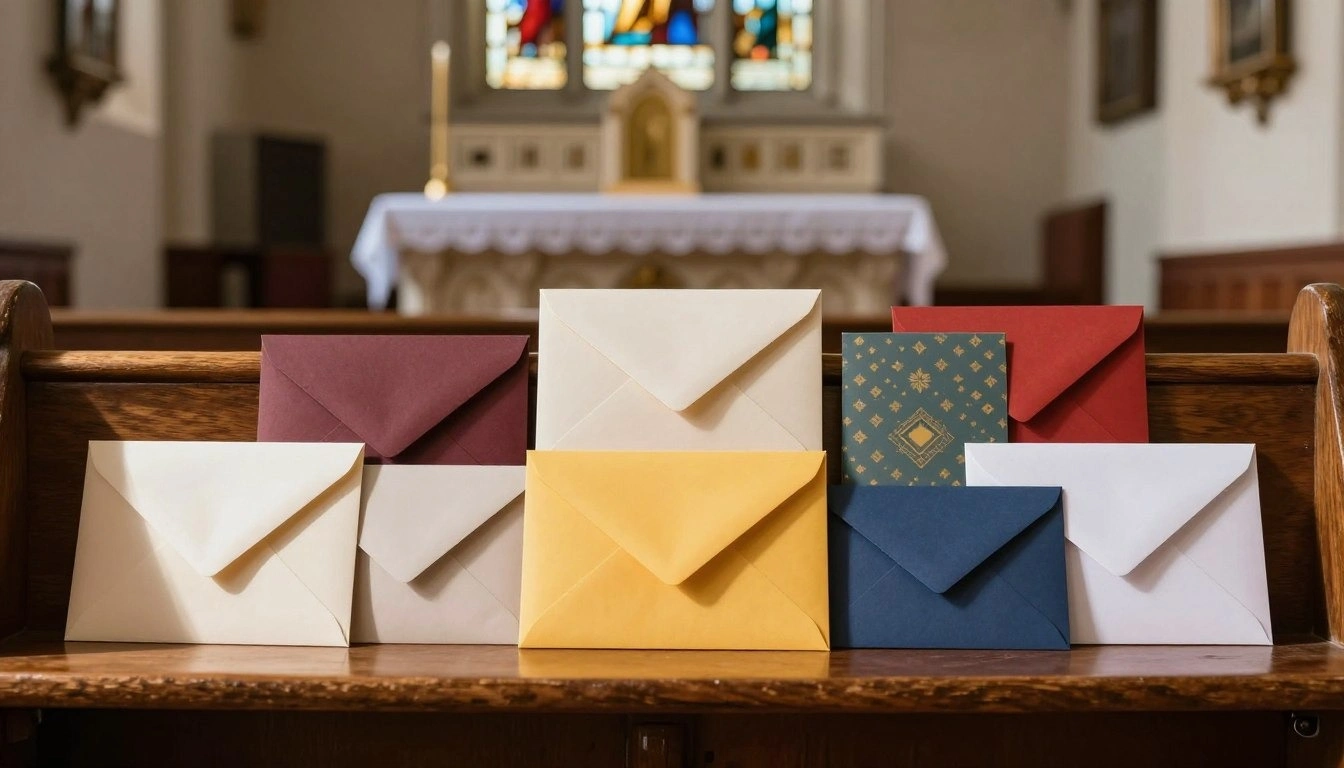
When you give at church, you’ll see many types of envelopes. They’re made for different needs and times. This makes it easy to help out with church activities and funds.
Weekly Numbered Envelopes
The weekly numbered envelope is the most common. It has a unique number for each donor. This helps the church keep track of donations. Weekly numbered envelopes also make sure donors get thanks for their gifts.
Special Occasion Envelopes
Churches have special occasion envelopes for certain events or causes. These envelopes are made for giving at specific times or for specific reasons.
Holiday and Seasonal Offerings
Churches give out special envelopes for holidays like Christmas or Easter. These holiday and seasonal offerings envelopes show the occasion. They also have a special fund for the money collected.
Building Fund and Mission Envelopes
Churches also have building fund envelopes and mission envelopes. These are for donations to specific projects or charities. They help track these donations separately from regular offerings.
Guest and Visitor Envelopes
Churches give guest envelopes or visitor envelopes to newcomers. These are not numbered and are for one-time use. They let visitors give without needing a special envelope number.
Getting Your Church Envelope Set
Getting started with church envelopes is easy. First, you need to get your own set. This ensures you can fully participate in the church’s giving.
Requesting Envelopes from Your Church
To get your envelopes, just ask the church. You can call the church office or talk to a staff member after a service. They’ll help you, asking for your name, address, and contact info.
Steps to Request Your Envelope Set:
- Contact the church office via phone or email.
- Visit the church office in person.
- Speak with a church staff member after a service.
After asking, the church will give you your envelopes. You’ll get a set of numbered envelopes for the year. They help you track your donations.
Understanding Your Envelope Number
Your envelopes have a special number. This envelope number is key for the church’s records. You’ll find it on your envelopes or in church info.
Why is your envelope number important? It makes sure your donations are counted right. If you have questions, contact the church office.
| Envelope Number | Purpose | Benefits |
|---|---|---|
| Unique Identifier | Tracks giving accurately | Ensures donations are recorded correctly |
| Personalized for each donor | Facilitates easy accounting | Provides a clear record of giving history |
What to Do If You Forget Your Envelopes
Forgot your envelopes? No problem. Churches have backup plans. You can:
-
- Use a generic envelope from the church.
- Report your envelope number to the church office.
- Donate by check, writing your envelope number on it.
It’s smart to keep extra envelopes at home or in your car. This way, you won’t forget them on Sundays.
How Do I Use Church Envelopes for Giving: The Basic Steps
Church offering envelopes make giving easy. Knowing how to use them is key for a smooth donation process. They help ensure your gift is recorded right and goes to the right place.
Step 1: Locate Your Personal Information Section
The first step is to find the section with your personal info. This is usually printed on the envelope.
Finding Pre-Printed Information
Most envelopes have your name, envelope number, and address already printed. This info helps the church track your donation.
Filling in Blank Envelopes
If you get blank envelopes, fill in your details. Write your name and envelope number clearly.
Step 2: Fill in the Date
Include the date of your donation. This helps the church keep a record of when you gave.
Step 3: Write the Amount
Write the amount you’re donating clearly. This ensures your gift is recorded right.
Using Numbers and Decimal Points
Use numbers and include decimal points for cents. For example, $50.00 should be written clearly.
Writing Legibly
Make sure your handwriting is easy to read. If it’s hard to read, print the amount instead.
Step 4: Specify Fund Allocations
Many envelopes let you choose where your donation goes. This could be to the general fund, a project, or a charity.
Here’s an example of how to record fund allocations:
| Fund | Amount |
|---|---|
| General Fund | $20.00 |
| Building Fund | $30.00 |
| Total | $50.00 |
By following these steps, your donation will be processed correctly and used as intended.
Filling Out Your Envelope for Cash Donations
Filling out your envelope for cash donations is easy but important. It helps the church manage its money well. When you donate cash, following a few simple steps is key. This ensures your donation is handled right and recorded correctly.
Counting Your Cash Before Sealing
Before sealing your envelope, count your cash carefully. This step prevents mistakes in how much you donate. Take a moment to count your cash to make sure it’s right.
Recording the Amount Clearly
After counting, write the amount clearly on the envelope. This means writing the total you’re donating in the space given. Clear handwriting is crucial to avoid mistakes. Double-check that the amount you wrote matches the cash inside.
Securing Cash Inside the Envelope
After writing the amount, put the cash inside the envelope. It’s important to fill out the envelope right before sealing it. Here are some tips to keep your cash safe:
- Make sure the cash is placed inside the envelope correctly.
- Avoid folding or crumpling the cash, as this can make it difficult to count later.
Sealing the Envelope Properly
To seal the envelope right, moisten the adhesive strip and press it firmly. This makes sure the envelope stays closed and your cash is safe.
By following these steps, you help ensure your cash donation is handled with care. Your contribution will support the church’s activities well.
Using Church Envelopes with Check Payments
When you donate to your church with a check, using envelopes is key. It makes sure your gift is handled right. It also keeps a clear record for you and the church.
Writing Your Check Properly
To avoid any problems, fill out your check correctly. This includes a few important steps:
Date and Amount Requirements
First, date your check with today’s date. This keeps your donation in the right time frame. Then, write the amount in numbers and words. For example, if you’re giving $100, write “100.00” and “One Hundred Dollars” below your name.
Signature Verification
Lastly, sign your check clearly. Your signature proves you’re the one making the payment. Make sure it matches the one your bank has on file to avoid any trouble.
Making Your Check Payable to the Church
When writing a check for church donations, make sure it’s to the right place. Usually, this is your church’s name or its charity. Double-check the payee name on your envelope or with church staff if you’re not sure.
Adding Your Envelope Number to the Check Memo
The memo line on your check is optional but useful. It’s a good idea to include your envelope number here. Just write “Env. #XXXX” (put your actual envelope number in place of XXXX) in the memo line. This makes sure your donation is recorded right and quickly.
Designating Gifts to Multiple Funds or Causes
When you give to your church, you can choose where your money goes. This lets you help out in areas that matter most to you.
Understanding Different Church Funds
Churches have many funds for different needs. Knowing about these helps you decide where to give.
General Operating Fund
The General Operating Fund pays for everyday church costs. This includes things like staff salaries and keeping the building in good shape.
Missions and Outreach
This fund helps the church spread the word and help others. It supports local projects, mission trips, and other churches.
Building and Maintenance
The Building and Maintenance fund takes care of the church’s building. It covers repairs, updates, and expansions to keep the church welcoming.
Breaking Down Your Gift Allocation
It’s good to plan how you’ll split your giving. You can choose a percentage or a set amount for each fund.
For example, you might give 50% to the General Operating Fund, 30% to Missions and Outreach, and 20% to Building and Maintenance. This way, you support different parts of the church while staying within your budget.
| Fund/Cause | Percentage | Amount |
|---|---|---|
| General Operating Fund | 50% | $500 |
| Missions and Outreach | 30% | $300 |
| Building and Maintenance | 20% | $200 |
Recording Multiple Designations Clearly
Make sure to write down where your money is going. This way, your gifts go to the right places.
If you’re giving $1,000 and want to split it as mentioned, write it on the envelope or check. For example: “$500 General Operating Fund, $300 Missions and Outreach, $200 Building and Maintenance.”
By doing this, you help your church in meaningful ways. Your gifts support the important work and causes you care about.
Special Situations and Considerations
When you donate using church envelopes, you might face unique situations. These need careful handling.
Giving Anonymously with Envelopes
Want to give without revealing your name? You can still use envelopes. Just leave the donor info section blank or use a plain envelope.
Making Memorial or Honor Gifts
For memorial or honor gifts, follow the church’s rules. These gifts honor or remember someone special.
Including the Honoree Name
Make sure to write the name of the person being honored or remembered. This lets the church know who to thank.
Notification Information
Want the honoree’s family or the person honored to know? Give their contact info. This way, they get the thanks they deserve.
One-Time Visitors Without Assigned Envelopes
Visiting once? You can still donate. Use a guest envelope or a plain one. Some churches have these for visitors.
Electronic Giving and Envelope Tracking
Many churches offer online giving. Even with this, you might get an envelope for records. Keep track of your online donations separately.
| Type of Giving | Description | Envelope Designation |
|---|---|---|
| Anonymous Giving | Giving without revealing donor information | Leave donor info blank |
| Memorial/Honor Gifts | Giving in memory or honor of someone | Include honoree’s name |
| One-Time Visitors | Giving by visitors without assigned envelopes | Use guest or plain envelope |
| Electronic Giving | Online donations | Track separately, may receive envelope for record-keeping |
Common Mistakes to Avoid When Using Church Envelopes
To make sure your church donation is handled right, avoid common mistakes with envelope giving. Knowing these pitfalls helps make the donation process smoother. It also ensures your gift is recorded correctly.
Forgetting to Seal the Envelope
Forgetting to seal your envelope is a big mistake. It can cause cash or checks to get lost or misplaced. Always seal your envelope well before you give it in.
Illegible Handwriting Issues
Illegible handwriting can lead to big problems. It might make it hard to read what’s on the envelope. To avoid this, make sure your handwriting is clear and easy to read. If your handwriting is hard to read, consider printing the details instead.
Mismatched Amounts and Contents
Writing the wrong amount on the envelope is a common mistake. This can cause delays or confusion. Always double-check that the amount you’ve written matches the contents of the envelope.
Double-Checking Before Submission
Before you give in your envelope, check the information. Make sure you’ve filled everything out right, sealed it, and that the amount matches. This simple step can prevent many problems.
| Common Mistake | Potential Issue | Prevention Tip |
|---|---|---|
| Forgetting to Seal the Envelope | Lost or misplaced donations | Always seal your envelope securely |
| Illegible Handwriting | Misinterpretation of information | Use clear and legible handwriting or print |
| Mismatched Amounts and Contents | Delays or confusion in processing | Double-check that the written amount matches the contents |
Using Someone Else’s Envelope
Using someone else’s envelope can cause confusion. Always use your assigned envelope number. This ensures your donation is correctly recorded to your account.
By being aware of these mistakes and avoiding them, you help make the donation process smoother. This ensures your gift is handled efficiently.
Keeping Personal Records of Your Church Giving
Keeping accurate records of your church giving is key for spiritual growth and financial planning. It helps you understand your giving habits and make smart choices about your contributions.
Why Personal Records Matter
Personal records of church giving are very important. They let you track your donations over time. This way, you can see how your giving matches your financial situation and spiritual goals. They are also crucial for taxes, as they help prove your charitable deductions.
Key benefits of maintaining personal records include:
- Enhanced financial planning and budgeting
- Improved tax preparation and compliance
- Better tracking of giving goals and progress
What to Track for Tax Purposes
For tax purposes, it’s important to track certain details about your church donations. You should note the date and amount of each donation. Also, any goods or services you get in return for your contribution.
IRS Charitable Contribution Rules
The IRS has rules for charitable contributions. Your donation must be to a qualified organization. You need a receipt or bank record to prove your gift. For donations over $250, a written acknowledgment from the charity is required.
Not all donations qualify for a tax deduction. For example, donations to individuals or certain organizations may not be eligible.
| Donation Type | IRS Requirement | Deduction Eligibility |
|---|---|---|
| Cash Donations | Receipt or bank record | Generally eligible |
| Goods or Services | Written acknowledgment for $250+ | Eligible if no goods/services received |
| Non-Cash Donations | Detailed records and appraisal for $5,000+ | Eligible with proper documentation |
Understanding Your Year-End Giving Statement
At year-end, your church will give you a giving statement. This document is key for tax preparation. It shows your charitable contributions for the year.
When you look at your year-end giving statement, make sure it has:
- The total amount of your donations for the year
- A breakdown of your donations by date and amount
- Any goods or services received in exchange for your donations
By carefully reviewing your giving statement and keeping accurate records, you can maximize your tax benefits. You’ll also deepen your understanding of your giving journey.
Conclusion
Using church envelopes for giving is easy once you know the basics. It helps you manage your donations well. This way, you support your church’s mission effectively.
This guide has shown you how to get started with church envelopes. You learned how to fill them out for cash and checks. It also covered special cases, like giving to multiple funds or making memorial gifts.
By following this guide, you make sure your donations are recorded right. Keeping track of your giving is also important for taxes and your year-end statement.
Using church envelopes the right way lets you support your church’s work with confidence. It’s a simple way to build community and care for your church’s finances.

Leave a Reply