
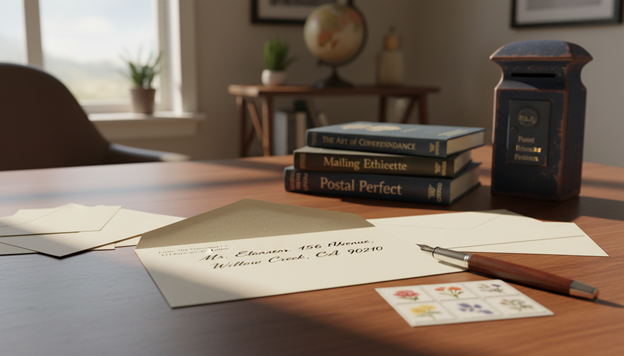
Nowadays we have to learn how to address an envelope as a key for sending mail. It makes sure your mail gets to the right person on time. It also shows respect and professionalism. Whether it’s a casual letter or a formal document, knowing the right way to address it is important.
This guide will show you how to address envelopes correctly. You’ll learn about using titles, where to put names and addresses, and more.
Key Takeaways
- Addressing envelopes correctly prevents delivery issues and maintains professionalism.
- Using the appropriate titles when addressing recipients shows respect and adherence to mailing etiquette.
- Proper envelope addressing includes clear formatting for readability and accuracy.
- Following sending mail guidelines ensures timely and reliable mail delivery.
- Understanding cultural and formal conventions boosts the effectiveness of your correspondence.
Understanding the Basics of How to Address an Envelope
Knowing how to address an envelope is key for sending mail. This guide covers the basics of envelope addressing. It also talks about mailing rules and postal guidelines to help your mail arrive on time.
Start with the recipient’s name and title. It’s important to use the right honorific to show respect. Then, arrange the address clearly, following USPS standards. This includes the street address, city, state, and ZIP code.
Each part of the address has its place on the envelope. This makes it easier for postal services to handle and deliver your mail.
The right order and alignment of address parts are important. They help postal services work more efficiently. Here’s a simple guide on where to put each part:
| Envelope Part | Content | Importance | |
| Top Left | Sender’s Name and Address | For return mail in case of nondelivery | |
| Center | Recipient’s Name and Title | Recipient’s Address | Main focus for delivery; must be most legible |
Following these mailing rules helps your mail get processed quickly. It also lowers the chance of it getting lost or returned. Addressing an envelope might seem simple, but it’s crucial for clear and respectful communication. It sets the tone for the message inside, whether it’s a bill, a personal letter, or a special announcement.
Choosing the Right Title for Recipients Under 18
When sending formal letters to kids, picking the right title is key. It shows respect for their age. Using the right titles helps kids feel valued and respected in society.
When to Use No Title for Minors
For most letters to kids, you can skip the title. Just use their first and last name. This is a friendly yet polite way to address them, perfect for casual and some formal letters.
Appropriate Use of “Miss” for Girls Under 18
Using ‘Miss’ for girls is still common and liked in formal situations. It shows respect, especially in big events, school letters, or when you don’t know them well.
- ‘Miss’ is good for formal invites.
- Letters to schools should use ‘Miss’ with the girl’s full name to show respect.
Using ‘Miss’ wisely adds to the formality and keeps the tone professional.
How to Use Gender-Neutral and Professional Titles
When addressing custom envelopes, it’s important to respect a person’s gender identity. Using gender-neutral titles is key to creating a respectful and inclusive environment. The “Mx.” The title is a great choice for those 18 and older who don’t fit into traditional gender categories.
This shift in professional communication shows a big change in how we value personal pronouns and gender identities. It’s a step towards a more inclusive world.
Using the Mx title in both work and casual emails makes everyone feel valued. It’s not just about showing respect. It’s also about being accurate when we don’t know someone’s gender.
It’s also important to think about gender pronouns when addressing someone. Asking for or confirming someone’s preferred pronouns before sending mail is a must. This way, we avoid making assumptions and show respect.
By focusing on respectful envelope addressing and using titles like Mx., we create a more inclusive space. This attention to detail is essential for maintaining professionalism and courtesy in all our communications.
Correctly Addressing Men 18 and Older
When addressing men over 18, using “Mr.” is the traditional and respectful way. This prefix is suitable for all adult men, regardless of their marital status or job. In formal letters, it’s important to show respect and distinction.
Using “Mr.” correctly in addressing adult men is key. It not only follows traditional etiquette but also makes your message clearer and more professional.
Here are examples of when to use “Mr.” when addressing adult men. They show when to skip professional or honorary titles.
| Scenario | Appropriate Use of “Mr.” |
| Standard Personal Letter | Mr. Alexander Hamilton |
| Invitation to a Casual Event | Mr. Benjamin Franklin |
| Business Correspondence | Mr. Thomas Jefferson |
| Formal Announcement | Mr. James Madison |
Proper Titles for Women 18 and Over Based on Marital Status
Choosing the right title for women on envelopes is key to showing respect. It’s important to use ‘Ms.’ or ‘Mrs.’ correctly. This ensures each letter is sent with the right amount of formality.
‘Ms.’ is great for unmarried women, those separated, or who keep their maiden name. It’s also a safe choice when you don’t know a woman’s marital status. On the other hand, ‘Mrs.’ is for married women who have taken their husband’s last name. It shows respect for their choice of surname.
Using “Ms.” for Unmarried, Separated, or Unknown Status
Using ‘Ms.’ shows that marital status doesn’t define a woman’s identity. It’s a title that respects the privacy of the recipient.
When to Use “Mrs.” for Married Women
Choosing ‘Mrs.’ for married women is a traditional choice. It’s best for formal settings or when a woman prefers this title.
Addressing Widows: “Ms.” or “Mrs.” Choices
For widows, the choice between ‘Ms.’ and ‘Mrs.’ depends on personal preference. It’s about respecting their choice and privacy. Talking to the widow or their family helps make the right choice.
| Marital Status | Title | Usage Context |
| Unmarried | Ms. | Appropriate for any personal or business correspondence |
| Married (using husband’s last name) | Mrs. | Typically used in formal invitations and official documents |
| Separated/Unknown/Widowed | Ms. | Respectful for both social and professional settings |
Incorporating Professional Titles on Envelopes
Using professional titles on envelopes shows respect and follows formal rules. It’s key to know how to use titles like Dr. address, The Honorable title, and military ranks. This makes sure your messages are both professional and polite.
For doctors and academics, “Doctor” is the title, no matter the gender. It goes before their full name, making the letter more formal. This shows respect for their work, whether it’s a professional question or an invitation.
When writing to elected officials, you must be precise. Use The Honorable title before their full name. This is for people like local government officials, judges, and senators. It shows respect for their role and follows official rules.
For military personnel, you need to include their full rank on the envelope. This honors their position and rank. The rank should be spelled out, followed by their name, without any shortening. This is important for both personal and official mail.
Using titles like Dr. address, The Honorable title, and showing military ranks on envelopes is more than just a formality. It’s a way to show respect and follow the rules of different professions. It makes sure every envelope you send is respectful and fitting for the person receiving it.
Cultural Etiquette and Tradition in Envelope Addressing
The art of envelope addressing varies worldwide, shaped by local traditions and social norms. Following envelope etiquette is key to show respect and professionalism in formal letters. It shows you understand traditional addressing rules and respect different cultures, which is crucial for international mail and special occasions.
In many Eastern cultures, it’s common to use someone’s full name, unlike the casual first-name use in the U.S. and Western Europe. Titles also play a big role in cultural mailing customs, showing respect for authority and social hierarchy. Knowing these details is vital for anyone dealing with international mail etiquette.
- Envelope etiquette says to write the recipient’s full name on the envelope in Japan, with the family name first. This follows the Japanese custom of putting surname before the given name.
- In the Middle East, traditional addressing rules often include titles that show respect and social status, reflecting the culture’s emphasis on honor and respect.
As the world gets closer, it’s important to know and use cultural mailing customs in your envelope addressing. It’s not just about following rules; it’s a way to show respect and diplomacy. Whether it’s a wedding invite, a business proposal, or a holiday card, using the right etiquette ensures your message is understood both literally and culturally.
Placement of Sender and Recipient Addresses on the Envelope
Knowing where to put addresses on envelopes is key for fast mail delivery. This guide will show you the best spots for the recipient and return addresses. Following these tips helps the mail get to its destination quickly and correctly.
Where to Write Recipient’s Name and Address
The recipient’s details should go in the middle of the envelope’s front. This spot makes it easy for postal workers to see and sort the mail. It’s not just about looks; it’s about helping the mail get to the right place.
Proper Location for the Return Address
The return address goes in the top left corner of the envelope’s front. This spot helps postal services find the sender’s address if the mail can’t be delivered. It’s a way to make sure mail gets back to the right person without trouble.
- The recipient address location helps streamline the sorting and delivery process.
- The return address position makes it possible for undeliverable mail to be returned efficiently.
Following these address placement tips helps make the postal service better. Properly addressed mail is less likely to get lost. This ensures that both deliveries and returns are handled well.
Formatting Names and Addresses for Readability
It’s important to format addresses correctly for mail to reach its destination on time. This guide covers how to arrange names and addresses on envelopes. It also talks about the best font styles for envelopes to make them clear and easy to read.
Using Standardized Address Formats for U.S. Mail
Using USPS address standards helps mail move smoothly. The format includes the full name, street address or P.O. Box, city, state, and ZIP code. Remember, avoid extra punctuation, but commas are okay to separate address parts.
Font Choices and Lettering Styles That Enhance Clarity
Choosing the right font for envelopes is key. Opt for clear fonts like block letters or simple cursive to avoid sorting mistakes. Using the same font helps mail arrive on time. Here are some good font options:
- Arial – Clean and evenly spaced, providing excellent legibility.
- Verdana – Offers wider spacing and a clear, simple design.
- Times New Roman – Though traditional, it remains one of the most readable fonts for print.
By following these tips, your envelopes will be sorted and delivered accurately and quickly.
Handling Couples and Household Addressing
When sending mail, knowing the right etiquette is key, especially for couples or household mail. Married couples are often addressed formally, while unmarried partners or roommates get their own names. It’s important to understand these differences to handle mail well.
For married couples, the usual way is to list the husband first, followed by his title, then the wife’s name and her title, and finally their shared surname. This is like “Mr. and Mrs. John Smith.” But, today, many prefer to use both names and titles, like “Mr. John Smith and Mrs. Jane Smith,” for equality.
When it comes to unmarried couples or roommates, it’s all about being clear about who’s who. Each person gets their own line to show they’re separate. This is especially true for unrelated adults living together, where each gets their own line and title for formal letters.
- John Smith
- Jane Doe
This way of addressing mail is not just polite but also prevents mistakes. It’s crucial for keeping communication professional and respectful, whether it’s for married or unmarried people.
Following these rules for addressing couples and handling household mail shows respect and care. It’s all about the details in communication, making sure everyone feels valued and understood.
How to Address an Envelope for Special Occasions
When you address envelopes for special events, you mix tradition with a personal touch. This makes each card unique, just like the event it celebrates. Whether it’s a wedding or a holiday card, how you write the address sets the mood and shows you care about the details.
For wedding invitation addressing, it’s very important. You should use formal titles and last names. Also, think about your guests’ marital status and titles. For example, you might write “Mr. and Mrs. John Smith,” but today, you can also use both names, like “Mr. John Smith and Mrs. Jane Smith.”
Holiday card envelope tips are a bit more relaxed but still need respect. You might use titles for important people, even in casual cards. For most holiday cards, just a first and last name is enough, unless it’s for someone with a special title or you don’t know them well.
Special occasion addressing covers more than just weddings and holidays. It also includes birthdays, anniversaries, and formal dinners. Each event needs the right etiquette to match its importance. Here’s a list of examples to help you get it right:
- Invitation to a formal gala: “Dr. Maria Gonzalez and Mr. James Gonzalez”
- 25th Anniversary Celebration: “Mr. and Mrs. James Lee”
- Graduation Ceremony: “Ms. Elizabeth Cho”
- Baby Shower: “Mrs. Emily Jordan”
It’s not just about the names and titles. The envelope itself can show respect and excitement for the event. The script, ink, and even the stamps you choose can add meaning and beauty to your special occasion cards.
Whether it’s a grand wedding or a small holiday party, how you address your envelopes matters. It sets a respectful and personal tone from the start, making the event even more special.
Common Mistakes to Avoid When Addressing Envelopes
A small mistake in envelope addressing can cause big problems. It’s important to address envelopes correctly. This ensures your mail gets to the right person and keeps your message professional.
One common error is misspelled names. This mistake can send your mail to the wrong place. It also shows you didn’t pay attention to the details. Making sure names and titles are spelled right shows respect and care.
Another mistake is using the wrong abbreviation errors. While abbreviations save time, they can confuse the postal system. Knowing and following USPS guidelines helps your mail get delivered on time.
By focusing on these details, you can make your mail more accurate and professional. Always check for typos and use the right formats. This ensures your mail is delivered smoothly.
Using Online Resources and Templates to Address Envelopes
Mastering envelope addressing is easier with digital aids. Today, many online tools and templates make this task simple. They ensure accuracy and follow the right etiquette for different letters.
Online resources offer pre-made templates for various needs, like invitations and business letters. These templates help place all details correctly. This is key for making a good impression on the recipient.
There are also advanced tools for addressing envelopes. They follow the latest postal rules. These tools check addresses to avoid mistakes and delays. They’re great for businesses sending lots of mail.
- Streamlined formatting processes
- Automated address verification
- Integration with mailing lists for bulk processing
For detailed addressing guides, check with trusted institutions. The Protocol School of Washington and the U.S. Department of Transportation are good sources. They provide guides for addressing government officials, military, and international dignitaries. These guides help keep correspondence formal and respectful.
Using digital solutions saves time and effort in preparing mail. It also ensures accuracy and proper address use. So, online templates, tools, and guides are essential in today’s fast world.
How to Address an Envelope for International Mailing
When you’re sending mail across borders, it’s key to address it right. Each country has its own way of writing addresses. Here are some tips to help you get it right.
The basic parts of an international address are the recipient’s name, street, city, and country. The country name should be in all caps. You might also need to include postal codes and region names.
Below is a guide for a few major destinations:
| Country | Address Format | |||||
| United Kingdom | Recipient Name | House number and street name | Locality name (if applicable) | POST TOWN | Postal Code | UNITED KINGDOM |
| France | Recipient Name | Number and street name | Postal Code CITY | FRANCE | ||
| Japan | Recipient Name | Building name and number | Street name | City, Prefecture Postal Code | JAPAN |
Following these steps helps your mail get to its destination fast. It also makes customs easier. Always check if you need extra forms for what you’re sending. Knowing these tips helps your envelope arrive on time and without trouble.
Conclusion
Mastering envelope addressing is about being polite, accurate, and following postal rules. It’s important to use the right titles, names, and formats. Also, make sure to place addresses correctly. This shows respect and helps your mail get to the right place.
Knowing how to address mail, like different titles and gender-neutral options, makes your messages more personal. This is key for invitations, business letters, or holiday cards. By following these tips, your messages are clear and well-thought-out.
Using tools and resources for addressing can also help avoid mistakes. This makes sending mail easier and more efficient. By keeping these tips in mind, you can handle all your mailing needs with confidence. Your envelopes will always make a good impression and arrive safely.

Leave a Reply