
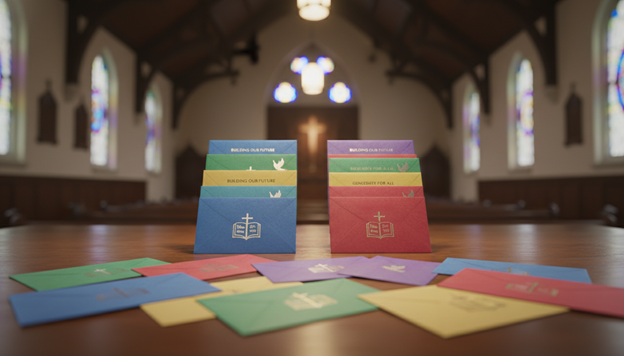
Church offerings envelopes are a simple yet powerful tool. In many U.S. churches, these envelopes are placed in pew racks or carried by the collection plate. They hold cash or checks, making a meaningful act.
Giving with purpose supports both worship and stewardship. This is why church envelopes remain a staple, even as online giving grows. They make the connection between faith and finances personal and intentional.
Church stewardship envelopes bring order to both donors and counting teams. They make giving more organized, discreet, and easier to track. Many include lines for important details, aiding in accurate donation records.
Take Praying Hands My Offerings Envelopes as an example. They are 6 1/4 inches wide by 3 inches high. They use black and brown ink on white paper and have an easy-open flap. There’s space for a name, address, amount, and envelope number.
In the sections ahead, we’ll explore the practical benefits of church offerings envelopes. You’ll learn how they support consistent giving, direct gifts to specific funds, speed up processing, and enhance accountability. We’ll also discuss how simple designation cards can engage online donors during the collection.
Key Takeaways
- Church offerings envelopes make Sunday giving feel intentional during worship.
- They help organize weekly donations and reduce confusion for counting teams.
- Church stewardship envelopes support privacy and protect check information.
- Donors can mark gifts for specific needs like missions or a building fund.
- Clear envelope details improve tracking, records, and audit trails.
- Designation cards can help online givers participate in the collection moment.
Why Church Stewardship Envelopes Matter Today
Church giving is more than just paying. It’s a way to show trust, based on Scripture and worship. For many, church envelopes help make giving a regular habit.
The Old Testament talked about tithing, giving 10% of income. Early Christians were encouraged to save money for giving. This practice helps even when life gets busy and money is tight.
Putting money in the plate is a simple act of worship. Church envelopes add a personal touch. They help people connect giving with prayer and gratitude.
Digital tools have made giving easier, but they haven’t lost their meaning. Churches use both envelopes and digital options. This way, everyone can give in a way that feels right to them.
Giving methods have changed over time. From livestock to online donations, each change made organization key. Churches need to count, record, and direct funds carefully.
| Giving era | Common form of gift | What churches had to manage | Why an organized tool helped |
| Agrarian communities | Crops, livestock | Storage, fair distribution, seasonal giving | Created a consistent way to account for varied goods |
| Coin-based economies | Coins | Counting accuracy, multiple small gifts | Improved collection flow and reduced mix-ups |
| Paper currency growth | Bills | Privacy and secure handling | Kept gifts discreet and easier to process |
| Check-writing decades | Checks | Protecting personal details and tracking totals | Supported labeling and safer handling through church stewardship envelopes |
| Today’s mixed giving | Online gifts, cards, cash, checks | Matching records across methods | Reinforces weekly giving habits while digital options meet modern needs |
Many leaders keep both options open. Envelopes are for those who give in person. Digital giving is for those who prefer online. This way, everyone can give in a way that feels right to them.
Church Offerings Envelopes
Church Offerings Envelopes make giving a regular part of the week. They help counting teams work smoothly. This also makes members feel more confident in their giving.
Many churches prefer personalized donation envelopes. They guide the giving process without making it hard. This simple design keeps the focus on worship.
How envelopes create an organized system for collecting weekly gifts
Church Offerings Envelopes have all the important details in one place. They include the giver’s name, address, and amount. This reduces confusion and errors from loose notes.
Over time, the process becomes easy to follow. Greeters, ushers, and counting teams know what to expect. Personalized envelopes also help new givers know what to do without asking.
| Envelope feature | What it captures | How it helps on a typical Sunday |
| Name and address lines | Household identification for records | Speeds up entry and reduces mix-ups between families |
| Amount field | Gift total for cash or check | Supports accurate counting and quick reconciliation |
| Envelope number (optional) | Link to a donor profile or household | Makes sorting simpler when many gifts come in at once |
| Fund checkboxes | Tithe, Offerings, Missions, Building, special programs | Clarifies intent so deposits and ledgers match donor wishes |
Why envelopes help keep donations discreet and protect check information
Church Offerings Envelopes let members give privately. This matters, as it keeps the amount of the gift private. It also helps families discuss giving in their own time.
Sealed envelopes protect check information during handling. Names, bank details, and routing numbers stay hidden. This builds trust week after week for many churches.
How donors can designate funds for missions, building funds, and special programs
Clear fund lines help donors direct their gifts. Many envelopes include spaces for Tithe, Offerings, Missions, and Building. Some also have space for special programs.
This is great for seasonal giving and targeted collections. Churches often prepare envelopes for Easter, kids ministry, or short-term outreach goals. When the designation is printed, the gift is easier to route without extra follow-up.
Better Donation Tracking, Accounting, and Audit Trails
Clean records start when a gift is first received. Using church envelopes each week makes counting easier. The team has clear details to work with.
This small change helps with steady donation tracking. It also means fewer questions later, like during monthly close or year-end giving statements.
How donor details on the outside of envelopes simplify recording and reconciliation
Church envelopes have key fields like name, address, amount, and fund selection. This makes it easier to record gifts correctly. It also helps match totals against the deposit.
It’s also helpful when a check lacks a memo line or cash is given for a specific purpose. The envelope shows the donor’s intent. This reduces the need for rework.
Using unique donor numbers to match gifts to households in a donor system or ChMS
Many churches order yearly envelope sets with a membership list. Each household gets a unique donor number. This number is printed on all 52 envelopes for the year.
During counting, the number helps staff quickly find the right record in a church management system (ChMS). In many offices, a donor export from the ChMS takes thirty seconds or less. Manual setup can take hours or days.
Without a ChMS, teams might use an Excel file with names, addresses, and numbers. While it works, it adds steps. It also increases the chance of mismatched entries that slow down donation tracking.
| Workflow | How gifts are matched | Typical setup time | Common risk |
| church management system (ChMS) + numbered envelopes | Unique donor number on church offerings envelopes links to the household record | Donor export in thirty seconds or less | Wrong fund selection if envelopes are not reviewed during counting |
| Spreadsheet (Excel) + numbered envelopes | Staff searches the Excel list, then applies the gift in a separate record | Hours or days to build and maintain the file | Duplicate numbers or outdated addresses that disrupt donation tracking |
Why stored envelopes can support accountability and provide a paper trail
After deposits are made, stored envelopes act as a simple paper trail. If a question arises, the envelope confirms the amount and designation.
The long-term record is in the church management system (ChMS). But the physical envelope adds a layer for accountability. This extra layer supports tracking without changing how members give.
Encouraging Consistent Giving With Weekly Giving Envelopes
Having a simple routine makes consistency easier. Weekly giving envelopes provide that routine. They are dated for each Sunday, acting as a quiet reminder during worship and planning.
How 52-week sets act as a built-in reminder for systematic generosity
A typical yearly packet has 52 envelopes, one for every week. This structure supports systematic generosity. It makes giving a habit, not a random act.
Church stewardship envelopes also help families budget their giving. They make it easy to track giving over time, not just guess.
Helping members stay on track with pledges using church tithing envelopes
Life can get busy, making it easy to miss a week of giving. Church tithing envelopes keep each week organized. This helps members notice and catch up without stress.
For counting teams, these envelopes make tracking gifts easier. They include space for clean handling and fewer questions during reconciliation.
Offering weekly and monthly options to fit different giving habits
Not everyone budgets the same way. Some prefer weekly giving tied to Sunday worship, while others budget by month. Providing both options makes it easier for everyone to participate without changing the church’s goals.
| Envelope option | Best fit for | How it supports follow-through |
| Weekly giving envelopes (52-count set) | Members who budget week to week and attend most Sundays | Dated cadence encourages systematic generosity and reduces missed weeks |
| Monthly set | Families who budget by paycheck cycles or pay bills monthly | Fewer decision points while keeping giving intentional and planned |
| Church stewardship envelopes for special seasons | Households that prefer targeted goals during key times of year | Adds structure for seasonal giving while keeping regular habits intact |
Church stewardship envelopes offer clear options and a steady rhythm. Church tithing envelopes and monthly packets keep giving simple. This way, giving stays consistent without feeling complicated.
Keeping Online Donors Engaged During the Offerings Moment
Many churches now get gifts all week through apps and recurring drafts. Yet, the moment of giving during worship is very important. People who give early might want a way to show they’re participating.
Why some online donors feel disconnected when the plate is passed
When the plate is passed, some online givers feel left out, even if they’ve already given. This makes giving feel transactional, like just paying a bill. It’s not about worship anymore.
Over time, this feeling can make people stop giving. They might cut back or stop giving altogether. It’s not because they disagree with the church, but because they don’t feel connected anymore.
How pew cards or online giving designation cards help donors participate in worship
Offering pew cards that show a gift was made online is a simple solution. Families can put these cards on the plate. This way, their giving is acknowledged during the service.
This method works well with church envelopes too. It keeps the giving process smooth and consistent. Online donors feel connected to the worship service.
| Offering method | What the donor experiences during worship | What the team can capture |
| Online gift earlier in the week | Gift is real, but the moment of giving can feel missed | Digital record in the giving platform, with fewer in-service signals |
| Pew cards placed in the plate | A clear, shared action during the giving | Easy count of participating households and service-by-service engagement |
| Church envelopes used in person | Tangible act with privacy and a familiar routine | Written details that support tracking and fund designation |
Optional attendance support when cards include names or space for information
If pew cards have a family name or a space to write it, they can also track attendance. When a card is returned, it shows the family was there.
Staff can update this information later without stressing guests. Online giving cards can also have space for updates, like a new email or a prayer request. This keeps the process simple every week.
Practical Benefits That Help Donors and Counting Teams

Small details can make giving feel smoother and more respectful. Church giving envelopes help donors give easily, and the back-office steps stay clear. The goal is simple: protect the gift, protect the giver, and keep the counting team workflow moving.
Right-sizing envelopes for cash, bills, and checks to reduce handling issues
When an envelope fits what most people give, it cuts down on folding and loose items. Church offering envelopes are made to be the perfect size for bills and checks. This way, contents don’t slide out during collection or sorting.
For example, Praying Hands My Giving Envelopes measure 6 1/4 inches wide by 3 inches high. This size holds checks and dollar bills comfortably. It also helps counters stack, batch, and record gifts with fewer interruptions, supporting a steadier counting team workflow.
How sealable envelopes boost donor confidence and privacy
Some donors worry about check details showing through, or they simply prefer to keep amounts discreet. Secure donation envelopes that can be sealed shut offer a practical layer of privacy from the pew to the counting room.
That sealed edge also reduces accidental loss when the plate is passed or when bundles are moved to a safe location. For donors who value discretion, church giving envelopes with a seal can feel like a quiet sign of care.
Faster processing with features like an easy-open flap or thumb notch
Speed matters when volunteers are balancing accuracy with limited time. Secure donation envelopes often include an easy-open flap that helps the team access contents without tearing papers or wrestling with glue.
Some designs add a die cut thumb notch under the flap, so counters can open envelopes quickly without a letter opener. When each envelope opens cleanly, the counting team workflow stays consistent. Church giving envelopes move from sorting to recording with less handling.
| Envelope feature | Donor benefit | Counting team workflow impact |
| Right-sized format (example: 6 1/4 in. x 3 in.) | Checks and dollar bills fit without extra folding | Fewer loose items to chase; easier stacking and batching |
| Sealable flap | More privacy for amounts and check details | Lower risk of contents slipping out during transport |
| Easy-open flap | Gift stays secure until it is received for processing | Quicker access with less tearing and re-handling |
| Die cut thumb notch | Less tugging on the envelope during opening | Faster opening rhythm without tools, improving throughput |
Custom Tithe Envelopes and Church Envelope Design That Reinforce Mission
Envelopes are more than just containers for gifts. They make the act of giving special. Churches can use custom tithe envelopes and personalized donation envelopes to help focus and create a calm atmosphere during worship.
Using a church logo, Bible verse, or seasonal artwork to reflect church identity
Church envelope design often includes a church logo, a Bible verse, or seasonal artwork. These elements connect the gift to the church’s mission and values. Personalized donation envelopes also offer space for designations, making giving feel guided.
Some churches prefer a classic design that’s easy to read in any light. A simple style uses praying hands artwork in brown and black ink on white. This design is both clear and reverent.
How thoughtful design can make giving feel more meaningful and reverent
Design plays a big role in how we behave. An envelope with balanced spacing, clean type, and a calm image makes giving feel like worship. Custom tithe envelopes with praying hands can encourage a moment of reflection before giving.
Good design also helps counting teams. Clear lines for name, amount, and fund choice prevent mistakes. Personalized donation envelopes support both spiritual and practical aspects of giving.
Using color-coding for special collections and designated gifts
Color-coding is a simple way to save time. Churches often use white for weekly giving and pastel colors for special collections. This makes sorting easier and helps keep gifts accountable.
| Envelope color approach | Common use in worship | Sorting and accountability benefit | Design notes that keep it clear |
| Classic white | Weekly Tithe and Offerings | Consistent workflow for ushers and counters; easier batching | High contrast text; strong church envelope design for readability |
| Pastel (light blue) | Mission gifts | Quick visual separation for designated funds during counting | Keep the label short; match with personalized donation envelopes that list “Mission” plainly |
| Pastel (light green) | Building support | Reduces miscoding when multiple collections run in one service | Use clear fund titles like “Building” and avoid crowded lines |
| Pastel (light purple) | Special programs and seasonal outreach | Helps confirm gifts align with the intended collection | Pair color with a small seasonal icon; works well with custom tithe envelopes made for set campaigns |
Donation Envelope Printing and Templates for Easy Setup
Setting up donation envelope printing is easy if you treat it like a simple data project. You collect the right fields once and use them all year. This makes weekly giving smooth for members and counting teams.
What to include on envelopes
Most churches keep the outside simple and functional. They include space for the donor’s name, address, amount, and a fund designation. A printed envelope number is also important, linking each gift to a household record.
This number system helps avoid mix-ups when handwriting is hard to read. Donors might see the same number, like 4827, on every envelope in their set. When counters enter gifts, this number makes matching faster and more consistent.
| Envelope detail | What it captures | Why it helps week to week |
| Name | Donor identity at a glance | Speeds sorting and supports accurate posting |
| Address | Mailing record for statements | Reduces follow-up when records are incomplete |
| Amount line | Declared gift total | Helps reconciliation when cash and checks are mixed |
| Fund designation area | General, missions, building, youth, and other funds | Keeps restricted gifts aligned with donor intent |
| Envelope number (unique donor number) | Household link in the donor system or ChMS | Supports clean data entry, fewer duplicates, and a stronger audit trail |
How templates streamline layout
Using tithe envelope templates saves time and effort. The design is already set, with the right spacing and type. It also makes ordering personalized donation envelopes easier.
Templates reduce back-and-forth during proofing. The layout stays consistent, helping returning members know where to write and what to check.
Printing workflows with ChMS exports
A common workflow starts in a ChMS, where donor records are kept current. Staff create an export in 30 seconds or less. Many printers accept the file as an Excel sheet, producing 52 envelopes per donor for the year.
After delivery, the church hands out sets, donors return them weekly, and counters record gifts in the donor system. Envelopes are then stored for documentation and review. This approach makes donation envelope printing repeatable with less manual handling.
If a church has no ChMS, data entry is needed. Member details must be typed into Excel each year, which can take hours or days. This adds strain to the office calendar.
For churches wanting a done-for-you option, The Supplies Shops offers a custom envelope quote form. They provide a clear path: quote, design discussion, proofing, then production. Orders arrive as custom printed church offerings envelopes ready to use, standardizing personalized donation envelopes without rebuilding files from scratch.
Conclusion
Churches use Church Stewardship Envelopes to solve many problems every week. They bring order to the giving time and keep gifts private. This helps members give with purpose.
Donors can mark a fund on the envelopes, making it easier for the counting team. This reduces guesswork and makes things clearer.
Church stewardship envelopes also help with recordkeeping. A unique number on each envelope paired with a ChMS makes tracking easier. This speeds up the reconciliation process and supports stronger controls.
Stored envelopes create an audit trail. This can answer questions later without causing stress.
Most churches now live in a hybrid world. Giving should match this. Keep physical envelopes for those who prefer them, but also support online gifts.
Pew cards or designation cards let online donors participate during the service. This keeps worship shared and visible.
Next, review your current giving workflow from start to finish. Decide if weekly or monthly sets are best for your people. Then, confirm the fields you need, like name, address, amount, and designation.
After that, coordinate printing through a ChMS export or a managed service. This way, your envelopes will be ready for use.

Leave a Reply